
Spike, Tournament GrinderSpike, Tournament Grinder | Art by Zoltan Boros
We've all been there. You walk into a local gaming store (LGS), and there on the schedule is simply a dubiously named "Commander Tournament." You know it's going to be awful, but against your better judgment, you show up anyway. There are only 10 folks, half of which appear to have precons and are trying to play their first game ever, the other half of which have brought the most powerful thing they could put together out of their collection, and the last of which appears to have a completely blinged out cEDH deck.
Not a single game of the night is balanced, and everyone is unhappy with more or less all of the circumstances.
So, what is the alternative? Is there a way to run a Commander tournament that doesn't devolve into a pubstomping mess that isn't also just a cEDH tournament?
Well, let's look over some of the things that have been tried, and see how they sound, shall we?
Precon Tournaments
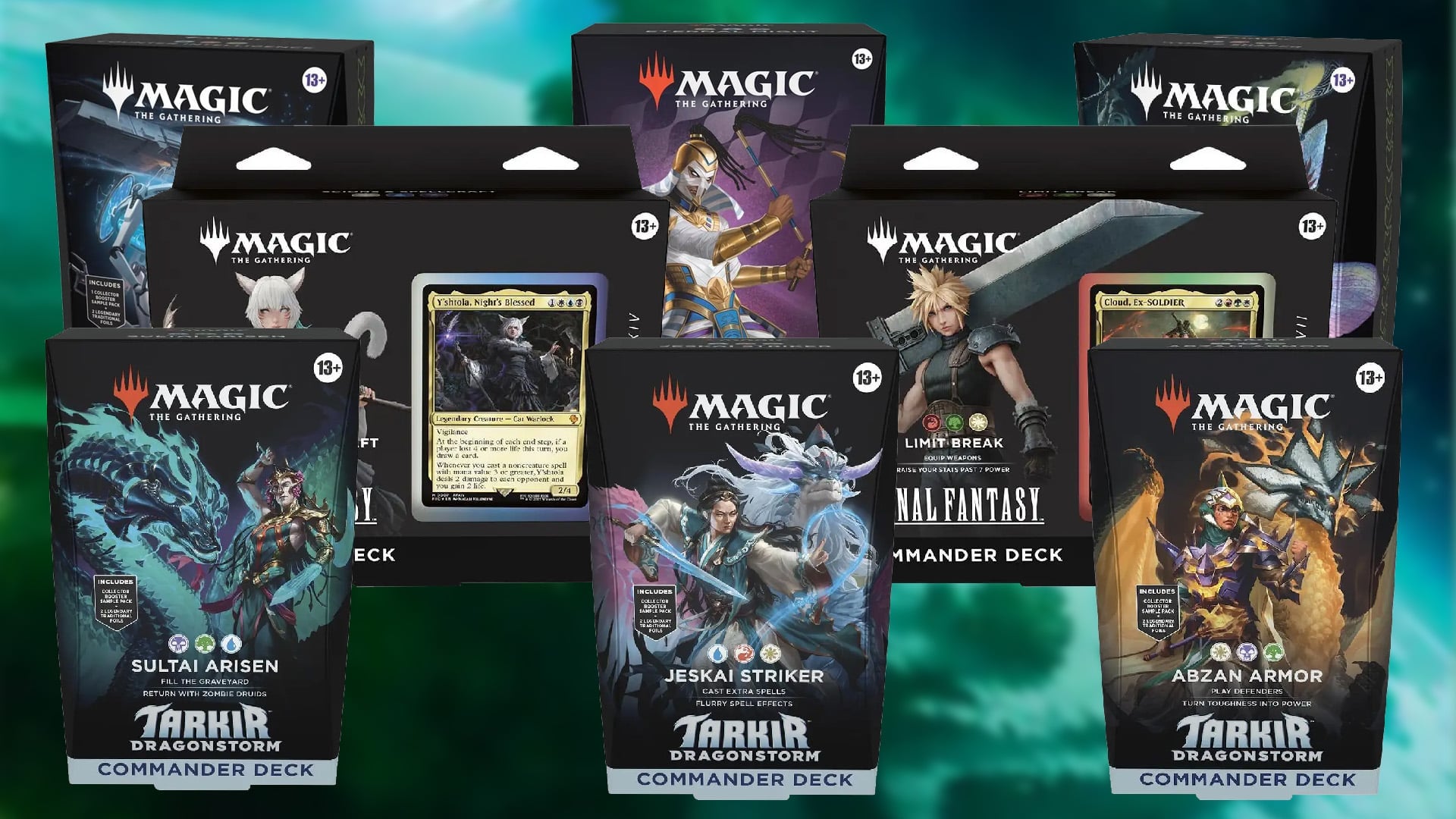
Precon tournaments are actually one of my favorite things. For those that have never participated, the idea is simple: Everyone brings or buys (take note, LGSs struggling to get Commander players to spend money in their stores) a preconstructed Commander deck, gets bracketed up, and plays a tournament with the unaltered lists.
Most often, especially because it moves product along with helping balance, this is done with a specific set of preconstructed decks, often with a draft to have players pick out the decks they'd prefer one by one.
So what do I like about them? Put simply, they're a way to play competitively in what's usually considered a non-competitive space. Multiplayer is fun, the politicking of a serious Commander game is interesting and changes on a dime, and with everyone playing decks that were designed to be played against each other, it's one of the more even playing fields you'll ever see in Magic: The Gathering. In other words? It's mostly going to be about the player, not the deck they brought or the money they spent.
At the same time, however, precon tournaments also bring an unserious air that's missing from many competitive events. Yes, people are playing to win, but they're often doing so with a complete pile of 100 cards that cares about three different things at once and plays multiple tap lands paired up with multiple three-mana rocks.
In short, it's competitive, but without being so competitive.
There are other environments trying to do similar things, but that are going about it in a much different way, however. Some less successfully, some more.
The Folly of "Bracket" Tournaments

Baron Von Count (Art by Jesper Ejsing)
One attempt I think falls into that first category of unsuccessful is so-called Bracket tournaments. While these are a step up from LGSs that are just running "Commander tournaments" with prizing that end up as a smorgasbord of decks from every Bracket and are inevitably won by the one cEDH player that managed to build a full competitive deck out of real cards, they're still deeply problematic. The reason?

Straight from Wizards' original Bracket announcement, the Brackets aren't designed, and really can't be, to be an unbreakable system. I actually went over this in detail when they were first announced, thinking that it might be fun to create new competitive environments out of Bracket 1 and Bracket 3. Spoiler alert: It wasn't. It simply created an environment where already known cEDH decks could remove 10 cards and then still dominate.
Can't win with combo? WinotaWinota, NajeelaNajeela, and YurikoYuriko, you're up! Can't win with an "early-game" combo? Hello, Tivit, Seller of SecretsTivit, Seller of Secrets and a late-game Time SieveTime Sieve! No two-card combos? Well, that's even easier, you can just pick up any random deck that wins with Underworld BreachUnderworld Breach or Hullbreaker HorrorHullbreaker Horror!
The issue with these Bracket tournaments is the same as it is with your random LGS Commander tournament: There's no way to really restrict folks from playing high-powered cards without a ban list that is three miles long, so there's always going to be folks that rightfully show up with them because money is on the line.
In short, no matter how you label it, it's a competitive tournament.
So what if you were instead to start with the premise that things were competitive, but just ban the best decks?
Fringe Festival: A Break from the Meta
That is, more or less, the premise of Fringe Festival, a tournament held every year at Enchanted Grounds in Littleton, Colorado (a suburb of Denver). I sat down with Logan of CriticalEDH, who happens to be not only the organizer of the event, but also the winner two years running, to find out a little bit more about this approach to a new competitive environment.
Logan D: Denver is one of the top cEDH scenes in the country. We have about 15 top 100 cEDH players in the world, within about a 20 mile radius[, with] two-to-three tournaments a week. And generally the scene has a very healthy meta, split between Blue Farm, Kinnan, Rog/Si, etc.
Doug Y: The usuals, for sure.
Logan D: The premise just started with "What would cEDH look like if all of the 'meta' commanders were banned?"
Doug Y: This was going to be one of my main questions, actually: Where did you draw the line? And has it changed in the second, or now entering the third, year of the event?
Logan D: It's not the easiest comparison, but you can look at the ban list from each event[...]

The Fringe Festival 2 - Ban List
- All partner commanders (including "Partner With")
- All friends forever commanders
- All Doctor + Doctor's Companion
- All 5-color commanders (Najeela, Sisay, etc.)
- All "Choose a Background" commanders
- Anything else that puts two commanders in the command zone
- Arcum DagssonArcum Dagsson
- Atraxa, Grand UnifierAtraxa, Grand Unifier
- Breya, Etherium ShaperBreya, Etherium Shaper
- Chatterfang, Squirrel GeneralChatterfang, Squirrel General
- Derevi, Empyrial TacticianDerevi, Empyrial Tactician
- Dihada, Binder of WillsDihada, Binder of Wills
- Elsha of the InfiniteElsha of the Infinite
- Esika, God of the TreeEsika, God of the Tree
- Etali, Primal ConquerorEtali, Primal Conqueror // Etali, Primal Sickness
- Glarb, Calamity's AugurGlarb, Calamity's Augur
- Gwenom, RemorselessGwenom, Remorseless
- Inalla, Archmage RitualistInalla, Archmage Ritualist
- K'rrik, Son of YawgmothK'rrik, Son of Yawgmoth
- Kefka, Court MageKefka, Court Mage // Kefka, Ruler of Ruin
- Kinnan, Bonder ProdigyKinnan, Bonder Prodigy
- Korvold, Fae-Cursed KingKorvold, Fae-Cursed King
- Lumra, Bellow of the WoodsLumra, Bellow of the Woods
- Magda, Brazen OutlawMagda, Brazen Outlaw
- Marneus CalgarMarneus Calgar
- Norman OsbornNorman Osborn // Green Goblin
- Ob Nixilis, Captive KingpinOb Nixilis, Captive Kingpin
- Ral, Monsoon MageRal, Monsoon Mage // Ral, Leyline Prodigy
- Rocco, Cabaretti CatererRocco, Cabaretti Caterer
- Rowan, Scion of WarRowan, Scion of War
- Stella Lee, Wild CardStella Lee, Wild Card
- Talion, the Kindly LordTalion, the Kindly Lord
- Tayam, Luminous EnigmaTayam, Luminous Enigma
- Tivit, Seller of SecretsTivit, Seller of Secrets
- Vivi OrnitierVivi Ornitier
- Winota, Joiner of ForcesWinota, Joiner of Forces
- Yidris, Maelstrom WielderYidris, Maelstrom Wielder
- Yuriko, the Tiger's ShadowYuriko, the Tiger's Shadow
- Zur the EnchanterZur the Enchanter
Logan D: Basically, anything that was popular or seen as a cedh commander (past or present) was banned. Banning all five-color and most four-color encompasses a lot, plus anything that puts two commanders in the command zone.
Doug Y: So, you didn't go off of EdhTop16 rankings, then? I suppose that would have just made for a lot of alternate five-color and four-color good stuff piles.
Logan D: We used multiple points of data including EDHTop16, online tournaments, gameplay videos, and also target banned local specialists.
Doug Y: Specialists?
Logan D: Example - at the time, Arcum DagssonArcum Dagsson wasn't a "real" deck (people are playing it now), but a local player destroys people on the deck, and has been for a while. He's rank 17 in the world. So... we banned Arcum [...] even though it wasn't "meta".
Logan D: [...] One other thing about the Fringe Fest - our local players are extremely dedicated to grinding the TopDeck circuit. Every single event (reminder, 2-3/week) is at least Bronze, if not Silver. We're all trying to make the invitationals for topdeck (there's two per year now). So the Fringe Fest really started as a way to have some fun and relax a little bit from the circuit grind. Even though it is also worth TopDeck points. [...] We have a live stream from the tournament if you want to check out any of the games.
Doug Y: For sure. A way to play "casual" cEDH, but in a tournament.
Logan D: Personally my version of casual is just practicing for tournaments, ultimately. There are decks that I play outside of tournaments that I'm either trying to learn something from, or explore an idea/archetype; but the way that cEDH works here, we don't really have a whole lot of time for "casual" cEDH. There's just too many tournaments. Even at the tournament we're thinking about the next one.
Doug Y: So, obviously you and these players are meant to be taken seriously... but are the decks, in your opinion?
Logan D: I mean these are all real cEDH decks, the ones that are better than them are just banned. [For what it's worth], I continued to play Shorikai after the Fringe Fest and I had a lot of great success with the deck.
Doug Y: So, you would classify Fringe as still cEDH, then. Maybe closer to the "[Competitive EDH] vs. [Tournament EDH]" divide that gets a lot of attention in the cEDH community?
Logan D: As a cEDH tournament grinder, I'm extremely against the term "tEDH". [...] It's not real.
Doug Y: That's interesting. You think it others the more fringe decks? ...or their players?
Logan D: cEDH is the mindset that you're sitting down to win at any (legal) cost. Tournaments don't really change that. We're already a fractured community. cEDH isn't really liked by most of EDH and we get clowned on by 60-card [competitive] players all the time. I'd rather not split further into "tEDH". [...] Our scene, despite being hyper-competitive, is extremely welcoming to new players. It's so important to foster the development of new cEDH players into people that want to compete at tournaments, and to provide a healthy environment for them to do so. This includes things like explaining "this isn't B4 or B3, we're here to win."
Part of the enjoyment is just how tough it is to win. Lots of players, especially new ones, make it harder on themselves by playing fringe or lower bracket decks.
Doug Y: Awesome. Anything else you want to include?
Logan D: We're planning an online Fringe Fest for the CriticalEDH league starting sometime in April. It will have similar rules and structure to the previous two events.
Many thanks to Logan for sitting down with me to talk over this new take on a cEDH tournament. Fringe Festival sounds like an absolute blast, although it will necessitate knowing a lot of the ins and outs of cEDH play, even if it were emulated outside of the competitive Denver area.
Additionally, as with most cEDH tournaments, running an event at this power level also requires being proxy friendly, as even fringe cEDH decks usually carry a price tag of at least $5,000. With all that in mind, I wouldn't suggest running this kind of event unless you already have a thriving cEDH player base.
With that said, if you were looking to lower the price of entry a bit, but still play with legal cards, there are a couple other less cEDH options that can still be a blast for either a tournament or a league situation.
Box League

Magic: The Gathering booster boxes
Before drafting Commander was ever a thing, Box Leagues existed and were pretty much the same premise of "What if Commander, but Limited?"
The idea is that everyone buys a booster box (this was before they made so many different kinds that you had to specify), usually of a Standard-legal set to try and keep things balanced. You crack your box, and then build a commander deck out of it. Simple, right? Well, yes and no. The devil is in the details, and just choosing the most powerful set you can think of might not be the right option.
Older sets may come to mind as more powerful, but will be prohibitively expensive and have few to no legendaries, with almost all of them not having enough colors to be usable. Newer sets will drown you in commander options, but may not have the power level you're looking for. What is your set's land base like? Is all of the mana fixing tap lands with little to no upside, or are there other possible options you'll be likely to see a few of at rare? Are there good ramp options, or are you going to be stuck with three-mana rocks?
There is a ton of calculus to be done in this format before decks are even being built, and you can do a lot of head work to get the best possibilities, or simply choose a box off the shelf on a whim and hope your pulls are good enough.
As for what happens after the decks are built, that varies wildly as well, with options from keeping decks the same to adding a pack every week to one of my favorites: Bringing back ante to keep the existing card pool moving around the shop.
From there, most leagues use a point system to keep track of who's winning, and often have small lockers in shop so the decks don't go home and get altered illegally.
Deck Roulette

Wheel of Fortune (Art by Daniel Gelon)
The final tournament type that I've seen go well often (and weird even more so) is Deck Roulette. Typically, standard Commander rules are used for this tournament variant, oftentimes with a Bracket attached.
So how is this different than the Bracket tournaments that I previously maligned? Simple: You don't play with your deck. Instead, a d4 is rolled at the beginning of each game, and decks are handed that many players to the right. This does mean that there is a one-in-four chance that you end up playing the deck you came with (which stops players from bringing the worst piles they can come up with, hopefully), but for 75% of your games, statistically, you'll end up playing a deck that someone else brought to the the table.
With only a 25% chance at playing the deck you brought with you, strategies abound. Some players lean into complexity, bringing complicated cards and convoluted combos they hope that they'll be the only ones able to pull off a win with. Others build Group Hug or Donate decks, hoping that the opponent that ends up with their pile will help them along in the 75% of games they end up with someone else's deck.
Most often, however? Folks just bring their favorite deck that fits within the Bracket they're playing at. The only caveat there is that it needs to be understood by all players that the deck they bring will be being handled by other players. That means that most players opt to bring cheaper decks with fewer cards they'll have to worry about in them.
Good Luck, Have Fun
While pretty much everyone can agree that the worst of all worlds is a "Commander Tournament," - sure to bring out cEDH players who will be mad that they're playing against casual decks, and casual players mad that they're playing against competitive decks - there are no shortage of options for how to play a fun tournament that can have everyone leaving happy.
Which, to be clear, is also possible in cEDH. While the learning curve is steep, the people are welcoming. And with most tournaments being proxy friendly, there's no real financial barrier to entry, either.
So whether it's a fringe fest of your own making, a regular cEDH tournament, or anything else on this list, the important thing is being a good sport and showing up with your A game. Whatever that may look like.

DougY
Doug has been an avid Magic player since Fallen Empires, when his older brother traded him some epic blue Homarids for all of his Islands. As for Commander, he's been playing since 2010, when he started off by making a two-player oriented G/R Land Destruction deck. Nailed it. In his spare time when he's not playing Magic, writing about Magic or doing his day job, he runs a YouTube channel or two, keeps up a College Football Computer Poll, and is attempting to gif every scene of the Star Wars prequels.
Your opinions are welcome. We love hearing what you think about Magic! We ask that you are always respectful when commenting. Please keep in mind how your comments could be interpreted by others. Personal attacks on our writers or other commenters will not be tolerated. Your comments may be removed if your language could be interpreted as aggressive or disrespectful. You may also be banned from writing further comments.